


Oral Health Education in Charlotte NC
Our dental team assesses parents' understanding of oral health and provides comprehensive oral health education during your child's visit. This includes guidance on home oral hygiene practices, healthy food choices, oral habit assessment and counseling, and recommendations on when orthodontic treatment (braces) may be needed.
At Bubbles Pediatric Dentistry, oral health education is part of every preventive visit. The goal is to help families understand what supports a healthy smile at home and when additional care may be needed.
Why Parent Guidance Matters During Pediatric Dental Visits
.jpeg)
Diet and Habit Guidance
Food choices and oral habits are reviewed based on the child’s age and risk.

Clear Guidance Helps Parents Support Healthier Smiles
Oral health education helps parents understand how daily habits affect a child’s teeth, gums, bite, and long-term development. Many dental concerns start quietly before pain or visible damage appears.
During a pediatric dental visit, the dental team can review brushing routines, diet patterns, fluoride use, oral habits, and early developmental concerns. This allows parents to make informed decisions at home and recognize when a concern needs professional attention.
At Bubbles Pediatric Dentistry, education is not treated as a quick reminder. It is part of a child’s ongoing care plan and is adjusted as the child grows.
What Should Parents Know About Home Oral Hygiene?
Home oral hygiene should match the child’s age, ability, and dental risk. Young children often need hands-on help because they cannot clean all tooth surfaces well on their own.

Brushing technique
Helps children clean teeth and gums more effectively

Parent supervision
Helps young children build safer and better routines

Fluoride toothpaste
Supports enamel strength when used in the right amount

Plaque patterns
Shows families where brushing support may be needed

Flossing guidance
Helps clean between teeth when spaces begin to close
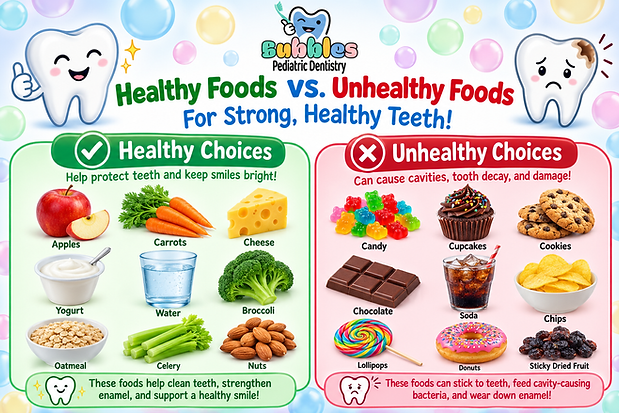
How Do Food Choices Affect Children’s Teeth?
Food and drink choices can affect cavity risk, enamel strength, and daily oral health. Frequent snacking, sticky foods, sweet drinks, and bedtime sugars can leave teeth exposed to acid more often.
Parents do not need a complicated diet plan. They need clear guidance on timing, frequency, and better options for everyday meals and snacks. Water, balanced meals, and limiting sugary drinks can help reduce cavity risk.
The dental team may provide recommendations based on the child’s age, eating habits, cavity history, and home routine.
When Do Oral Habits Need Dental Guidance?
Some oral habits are common in early childhood. Thumb sucking, finger sucking, prolonged pacifier use, tongue habits, lip habits, and mouth breathing may need evaluation when they continue beyond the expected age or affect development.
The dental team reviews the habit pattern, the child’s age, dental findings, bite development, and parent concerns before making recommendations. Some children may only need observation. Others may benefit from counseling, follow-up, or referral.
The goal is to guide families without blame and help protect the child’s teeth, bite, speech, and comfort.


When Should Parents Ask About Orthodontic Treatment?
Oral health education may include discussion about orthodontic treatment when tooth position, spacing, eruption, or bite development needs monitoring. Braces are not recommended for every child, and early evaluation does not always mean early treatment.
The dentist may explain whether a concern should be watched, referred, or addressed at a later stage. This helps parents understand timing before problems become more difficult to manage.
Infants
Gum care, first teeth, feeding habits, and first dental visits
Toddlers
Brushing help, fluoride use, pacifiers, and snack routines
Preschoolers
Habit counseling, cavity risk, and parent-supported brushing
School-age children
Flossing, sealants, permanent molars, and home care consistency
Teens
Braces care, diet choices, hygiene independence, and gum health
How Does the Dental Team Decide What Parents Need to Know?
Recommendations are based on the child’s age, dental findings, oral hygiene, diet, habits, cavity risk, growth pattern, and parent concerns. The dental team also considers what parents already understand and where more support may be helpful.
Some families need brushing instruction. Others need help with food choices, fluoride use, oral habits, or orthodontic timing. The goal is to give guidance that is practical, specific, and easy to follow at home.
Oral health education works best when parents feel informed and children receive consistent support between visits.
Oral Health Education for Stronger Daily Dental Habits
If you want clearer guidance on brushing, food choices, fluoride, oral habits, or orthodontic timing, an oral health education visit can help.
Bubbles Pediatric Dentistry provides oral health education in Charlotte NC during pediatric dental visits. Our team reviews your child’s needs, answers parent questions, and gives practical recommendations that support daily care at home.
The goal is to help parents feel informed and help children build healthier habits as they grow.
